This Website
2026-03
0 visits
# What this site is
Instead of relying on a CMS like WordPress, I built this portfolio in Svelte as a fully data-driven system. Every project is a JSON file. The site reads those files and renders them into project pages, filterable lists, and gallery thumbnails, all without a database or backend.
Designing the site this way made me realize how much the structure of data shapes how information can be explored. The portfolio stopped feeling like a collection of pages and more like a dataset that could be navigated from different perspectives.
Designing the site this way made me realize how much the structure of data shapes how information can be explored. The portfolio stopped feeling like a collection of pages and more like a dataset that could be navigated from different perspectives.
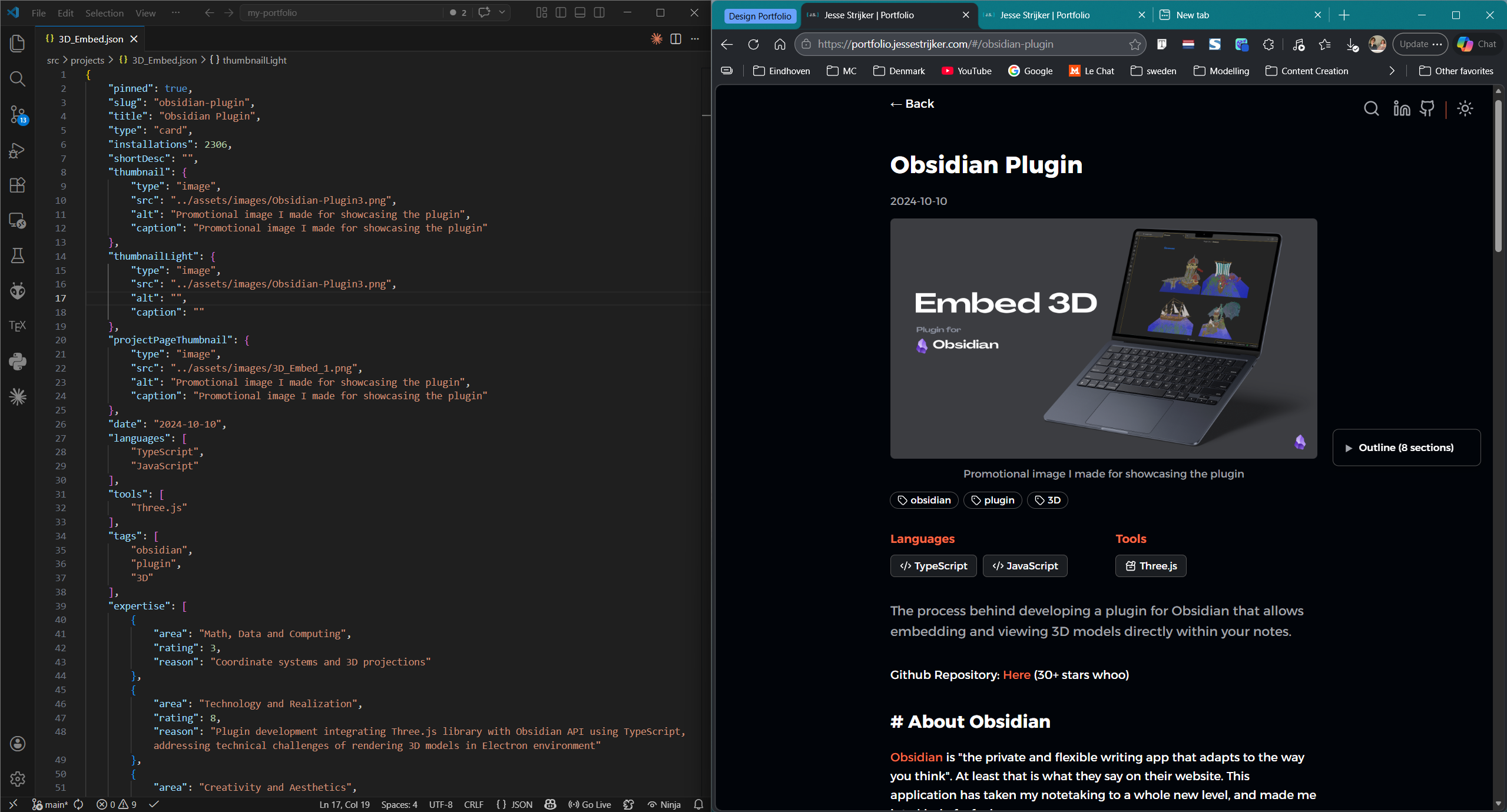
Projects are defined entirely in JSON - the structure determines what can be filtered, searched, and displayed
# Filtering and navigation
One of the features I'm most fond of is the tags, languages, and tools filtering system. Rather than scrolling through a flat list of projects, you can query by what matters, a specific programming language, a design tool, a topic area. This turns the project list into something closer to a queryable dataset than a static page.
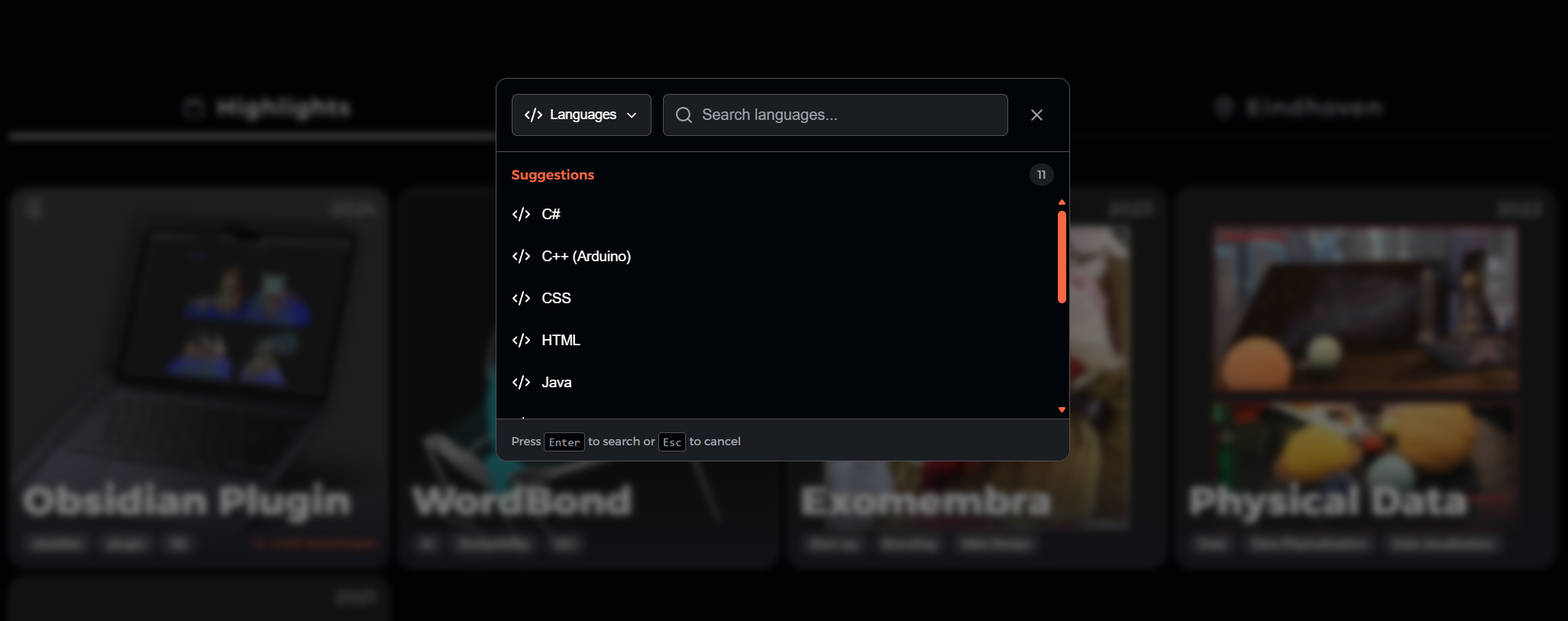
Filter projects by tags, languages, or tools - the structure of the data makes this possible
# The Infinite Canvas
Alongside the project pages, the portfolio includes an infinite canvas, a spatial, navigable reflection space. Rather than a linear about page, I wanted reflections, goals, and identity to feel like something you explore, and how each element is related to another. Cards on the canvas link out to project pages, creating a two-way relationship between the structured project data and the more personal narrative layer.
This was also my first time building a custom canvas renderer in Svelte, handling panning, zooming, card layout from JSON, and navigation between named positions.
This was also my first time building a custom canvas renderer in Svelte, handling panning, zooming, card layout from JSON, and navigation between named positions.
# Why Svelte
This was my first Svelte project. Coming from plain HTML/CSS and WordPress, Svelte's reactivity model made it easy to build filtering, live updates, and component-driven layouts without a lot of boilerplate. I get why people like it, though it's also easy to get lost in reactive variables and stores when the project grows.