Digital Twins in Education
2025-06
This project investigated how digital-twin-like real-time feedback changes novice students' attitudes toward learning programming. The central question was whether delivery style, not just correctness, affects confidence and perceived challenge while solving coding tasks.
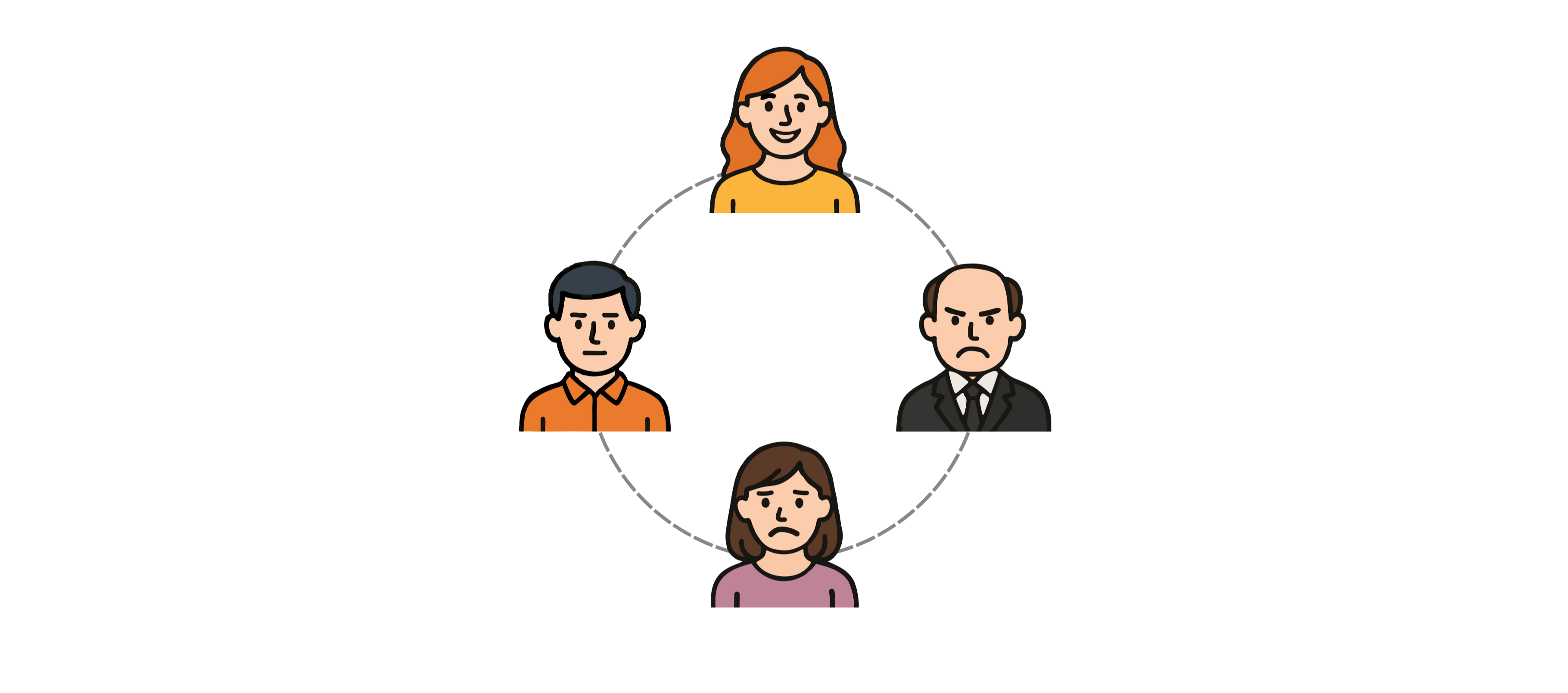
I designed and built a custom Arduino learning setup where participants received adaptive written-visual feedback in real time. The system embodied four feedback roles by combining two valence conditions (positive/negative) with two character styles (authoritarian-brief-critical vs supportive-extensive-emotional). The study combined strong literature grounding, an implemented technical prototype, and quantitative + qualitative analysis to evaluate impact.
I designed and built a custom Arduino learning setup where participants received adaptive written-visual feedback in real time. The system embodied four feedback roles by combining two valence conditions (positive/negative) with two character styles (authoritarian-brief-critical vs supportive-extensive-emotional). The study combined strong literature grounding, an implemented technical prototype, and quantitative + qualitative analysis to evaluate impact.
Key Features
- Large literature run-up on feedback factors, HCI communication style, and educational impact
- Research-through-design framing with explicit variable locking and rationale
- Web-based Arduino coding environment with role-driven adaptive feedback
- Avatar + written feedback channels aligned to designed role characteristics
- Pre/post measurement of self-efficacy and perceived difficulty
- Mixed-design ANOVA analysis with qualitative interpretation
# Research Goal
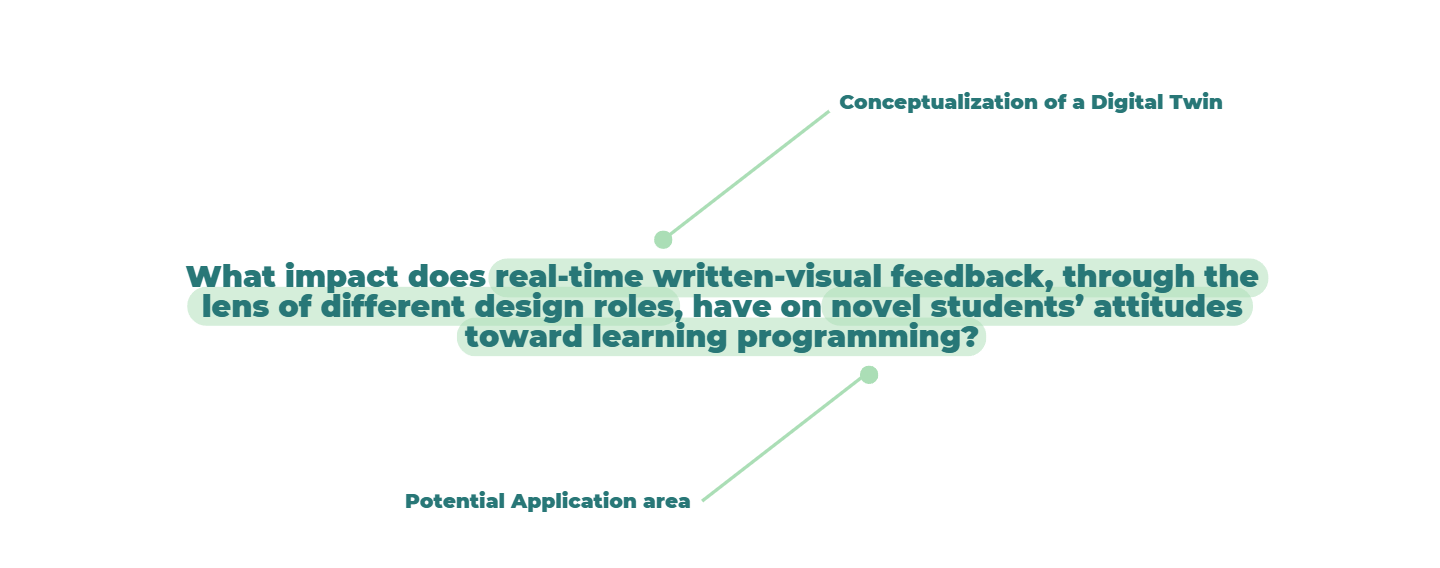
The study asked: What impact does real-time written-visual feedback, through different design roles, have on novice students' attitudes toward learning programming? Rather than treating feedback as neutral, the project tested feedback as a designed social role with style, tone, and visual expression.
# Literature and Conceptual Framing
A substantial run-up reviewed feedback theory across dimensions such as type, timing, source, medium, valence, learner factors, and context. The project translated this into a practical design matrix for experimentation, balancing high-impact educational variables with concrete interface design choices.
The framework also expanded into written and avatar-based feedback cues (authority, brevity, emotionality, facial expression, and visual tone), enabling a testable bridge between educational psychology and interaction design.
The framework also expanded into written and avatar-based feedback cues (authority, brevity, emotionality, facial expression, and visual tone), enabling a testable bridge between educational psychology and interaction design.
# Technical Prototype
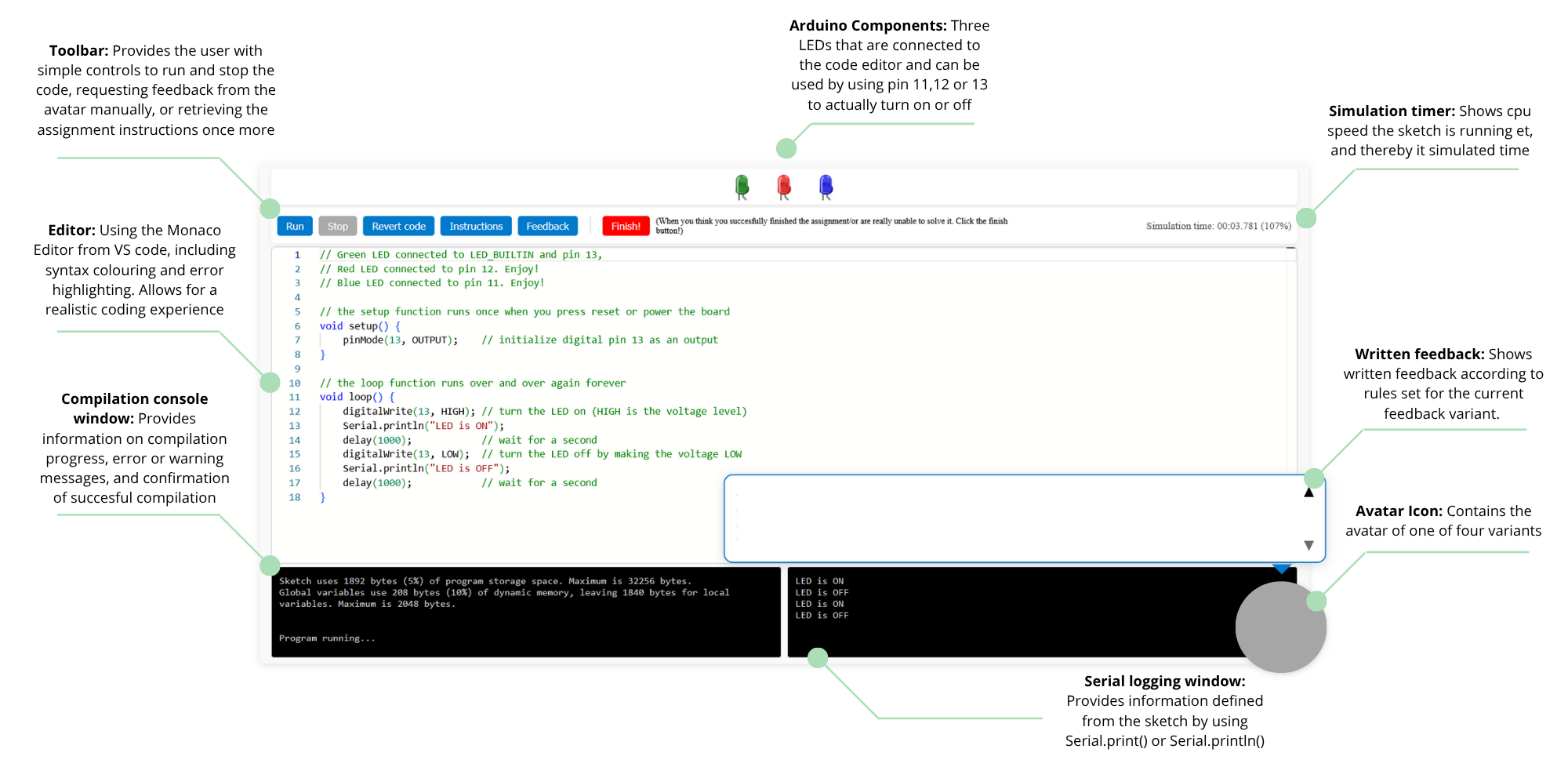
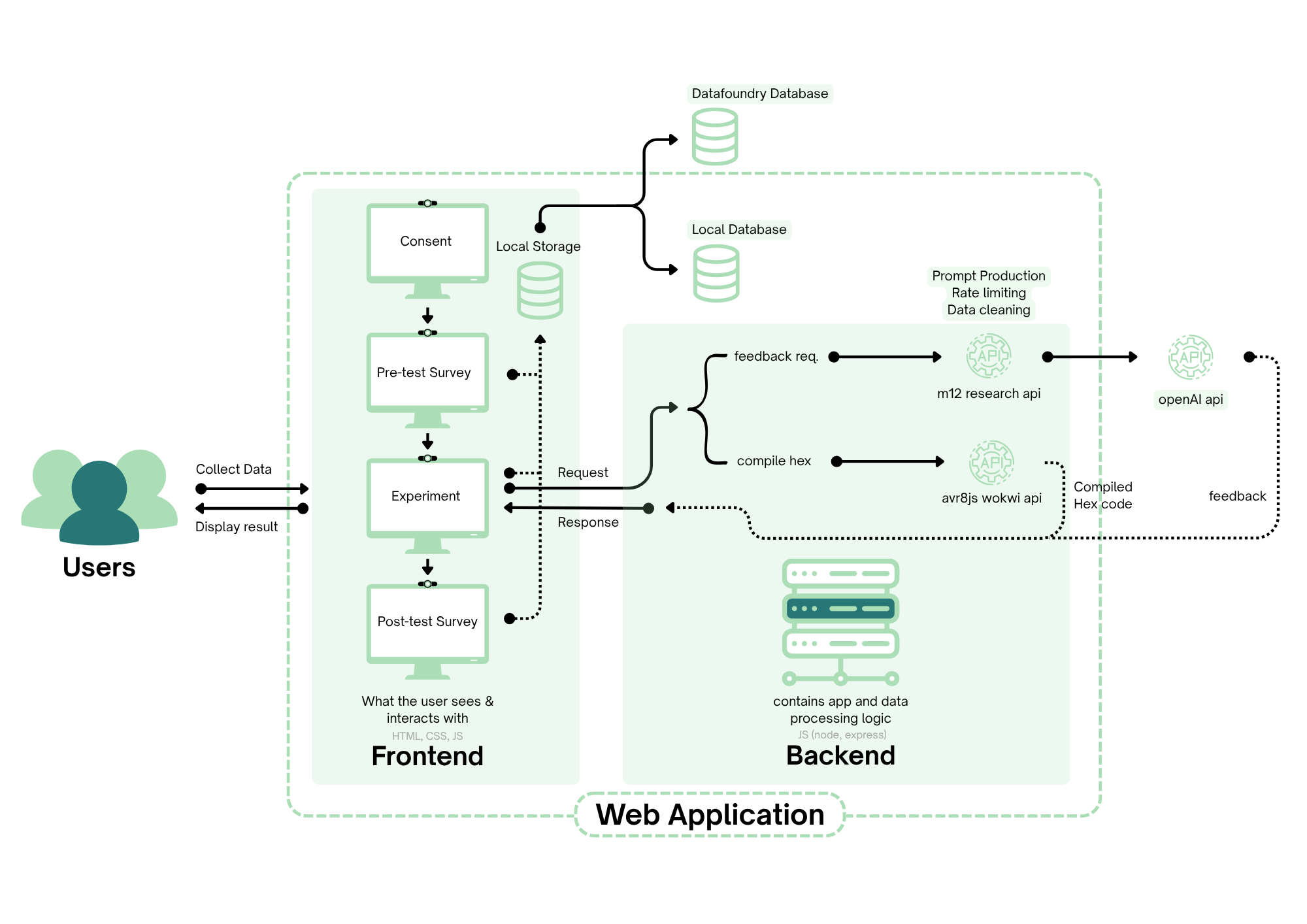
I built a browser-based programming environment where participants modified Arduino Blink logic into a non-blocking timing solution (millis-based). The environment used SurveyJS + AVR8js + Express APIs and integrated a backend LLM call to generate role-consistent feedback from participant code in near real time.
The interface kept task goals visible and paired written feedback with avatar design variations to represent each role consistently. This allowed controlled experimentation of delivery style while keeping assignment structure stable.
The interface kept task goals visible and paired written feedback with avatar design variations to represent each role consistently. This allowed controlled experimentation of delivery style while keeping assignment structure stable.
# Experiment Design
The study involved novice programmers (N=41), with pre/post measurement of Self-Efficacy (MSLQ-based) and Perceived Difficulty. Feedback was tested across four role variants that decomposed into valence and character-type dimensions.
The analysis combined 4-group comparisons with 2x2 factor-level unpacking to isolate whether observed effects came from valence, character type, or their interaction.
The analysis combined 4-group comparisons with 2x2 factor-level unpacking to isolate whether observed effects came from valence, character type, or their interaction.
# Results and Insight
Results showed a significant Time × Valence interaction for self-efficacy, indicating positive-valence feedback produced stronger confidence gains than negative-valence feedback. No significant effects were found on perceived difficulty.
A key takeaway is that emotional tone appears to be the strongest lever for confidence in this context, while character style alone was less decisive. Qualitative notes supported this: negative styles were more often described as stressful or demotivating, while positive styles were experienced as more supportive.
A key takeaway is that emotional tone appears to be the strongest lever for confidence in this context, while character style alone was less decisive. Qualitative notes supported this: negative styles were more often described as stressful or demotivating, while positive styles were experienced as more supportive.
# Reflection and Next Steps
The project highlighted the importance of assignment-task alignment, prototype fidelity, and participant interpretation effects when studying educational feedback systems.
Future directions include improving digital twin fidelity, refining task difficulty calibration, and extending measurement beyond short-term confidence change toward persistence and learning transfer in longer educational trajectories.
Future directions include improving digital twin fidelity, refining task difficulty calibration, and extending measurement beyond short-term confidence change toward persistence and learning transfer in longer educational trajectories.
# Actual (Unpublished) Paper/report
Open or download PDF
Final Report M12 (December 2024)